
Do you want to be informed on new Posts on this Thread? (members only)
| S&S Swan Maintenance - SWAN 40 RUDDER |
|---|
|
Join Date: 01 February 2007
Posts: 57 |
||
|---|---|---|
|
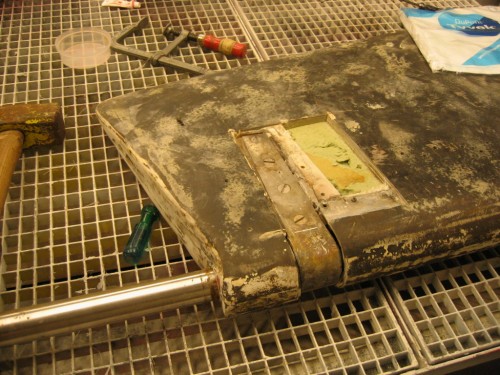
SWAN 40 RUDDER During my refit I have discovered some horizontal and vertical play (about 1 inch) between the stainless steel rudder stock and the fibreglass blade. Does anyone have drawings or photographs of the original rudder construction so I can understand how it was built ? I believe some owners have designed a larger rudder for their Swan 40s - what made you take this decision and can you supply drawings/photos ? Can you tell me pros and cons and rough cost please. Many thanks Richard Forrest
 |
|
Join Date: 20 February 2007
Posts: 119 |
||
|---|---|---|
|
I recently completed repair of my rudder on a 1969 Swan 43. I believe you will find that the rudder strap bushings are loose on the rudder stock. The rudder straps are welded around a bushing which is slipped over the rudder stock with a key way to prevent rotation. This bushing appears to be just press fitted on to the rudder stock and not secured mechanically. Over time this detail develops enough wear to cause the annoying movement of the rudder. I had my strap bushing welded to the rudder stock which is really the way to do it. I previously tried to pin the rudder from the side of the bushing into the rudder stock but this lasted only one season. See the attached photo for the strap/bushing and the rudder stock. You can also contact Mr. Lars Strom, Director of Nautor's Technical Department. They are very helpful and have numerous drawings and information. Good Luck |
|
Join Date: 20 February 2007
Posts: 119 |
||
|---|---|---|
|
Attached photo of rudder stock & strapping. 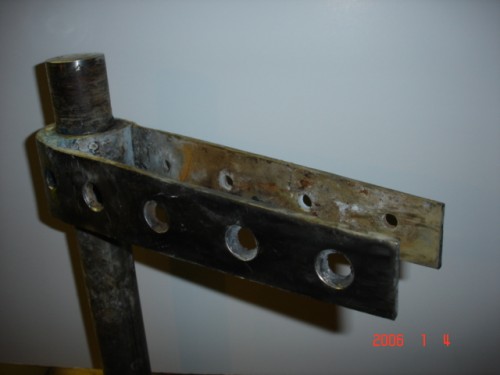 |
|
Join Date: 01 February 2007
Posts: 57 |
||
|---|---|---|
|
That's really helpful. Thank you |
|
Join Date: 20 February 2007
Posts: 119 |
||
|---|---|---|
|
Richard:
Attached for your info is the factory's instructions for rudder repair that I received from Lars Strom. Good Luck. Hiro
Dear Hiroshi
Nice to hear from you!
If the bronze shoe does not come off after the bolts have been removed, judicious hitting, if still no success in combination with heating to max 60C, should get it off.
Take care to support the rudder during this operation
Enclosed instructions for removal
Kind regards
Lars
SKEG RUDDER REMOVAL
There are two variations on this: removal of rudder blade only, leaving stock in place, or removal of blade and stock together. The latter is the more laborious operation. Irrespective of which alternative is attempted, the rudder fairing pieces have to be removed first. These consist of three separate pieces, fastened with self-tapping screws, which are probably well hidden behind filler. There is one fairing piece each side along the aft edge of the skeg, and one piece bent around the forward end of the rudder blade. This latter piece has extensions aft covering the metal straps holding the rudder blade to the stock. Removal of Rudder Blade only Remove the screws through the straps to release the blade. Take care to support it during this operation. When reassembling the rudder, new screws about two inches longer are needed, so their ends come out on the other side. Tighten the screws from their threaded end with a big wrench, as hard as possible, and finally lock them securely. A screwdriver is completely insufficient. Removal of Blade and Stock together Remove quadrant and unscrew stuffing box. The rudder stock is supported by the lower bearing, which is incorporated in the bronze casting (or stainless fabrication) at the lower end of the skeg. This casting is fastened with horizontal screws through the tip of the GRP skeg. If the casting refuses to come off even with all screws removed, some judicious hitting and heating should help. Take care to support the rudder while releasing the lower bearing. When reassembling, longer screws are needed, and they should be tightened and locked as described above. To check while fairing pieces are off The screws through the straps must be absolutely tight. Any play here will increase with the time, and cause sloppy steering, as well as increased fatigue in the straps, specifically where they are welded to the rudder stock bosses. Check these welds carefully for cracks. If the strap screws are loose, new longer screws are needed as described above. The strap bosses are shrunk onto the stock, and further locked with a keyway. If there is any play here, the easiest way to fix this is to weld the boss to the stock, taking care to use low-carbon filler, or to heat-treat properly afterwards. Rudder Bearings All Swans with skeg rudders have plain bearings (except SWAN 651's and 65/038 ...) There are bearing sleeves at the upper end of the stock, in the stuffing box (on larger Swans there are usually two, one at each end), and at the lower end of the stock. In connection with the lower bearing there is also an axial bearing taking the weight of the rudder. Recommended fillers Epoxy based fillers should be used for rudders. Do not use polyester based fillers underwater, as they tend to develop pox-like blisters. Water in rudder blade The reason for this (except for external damage) is either a cracked centreline joint, or leaking fairing piece screw holes. Water in the blade is not a serious problem, but in climates with freezing temperatures during the winter it must be ensured that the water is drained out before the cold comes. Drain the rudder by drilling a small hole at the top and the bottom. It would then be advisable before launching to put self-tapping screws imbedded in mastic into the holes, so they are easily opened when the boat is lifted the next time. The cause for the leakage has to be remedied. If it is a crack on the centreline, it can be repaired by cleaning the edges down to fresh material, and filling with epoxy. A leaking screw hole can be sealed with mastic. Do not use silicone underwater. Rudder blade trailing edge The trailing edge should be cut off straight with sharp corners. The thickness across the trailing edge could be about 6 mm (1/4") or even slightly more. This does not have any negative effect, as the streamlines behave like there were a longer trailing edge. A properly cut off trailing edge will prevent rudder vibration. |
- Threads : 1804
- Posts : 10761
- Members: 862
- Online Members: 0
